


The transition from managing your own money to partnering with a financial advisor is rarely driven by a sudden loss of intelligence or lack of information. We have found it is almost always driven by either a sudden gain in complexity, your priorities for time change, or the consequences of mistakes become more meaningful.
For years, you may have successfully navigated the financial markets pretty much without any outside help. You have likely found that DIY investing builds a certain kind of rugged confidence. You made thoughtful investment decisions. You weren’t guessing. You were engaged.
But over time, something changes.
It’s not that you’ve lost skill. And it isn’t that you can’t do math. But what once felt empowering can start to feel like a constant time commitment, a source of decision fatigue, or a nagging sense that something important might be slipping through the cracks. It starts to compete with the very life you want your wealth to support.
If you have quietly asked yourself, “Am I ready to stop managing everything alone?”, you aren’t surrendering. You are simply recognizing that your financial life has outgrown the spreadsheet that got you here.
The Quick-Start Roadmap: A Practical Way to Make the Switch Without Losing Control
A successful transition is a process, not a single event.
Do you want support with:
- Financial planning and coordination?
- Asset allocation and portfolio oversight?
- Tax planning and retirement income planning?
- Accountability and decision structure?
Not every investor needs everything.
Step 1: Gather Your Snapshot
Before you meet with any income professionals, gather a clean snapshot of your current system. This includes taxable accounts, Roth IRAs, 401(k)s, HSA details, and stock plans. Do not forget your estate planning basics, such as wills, trusts, and beneficiary designations (from old 401Ks and rollovers) are just as vital as your asset allocation.
Step 2: Identify the Top 3 causes of “Decision Fatigue”
What are the three decisions you are tired of revisiting? Is it how to create a paycheck replacement or implement a withdrawal strategy, or defining consistent rebalancing rules, or simply how to better identify true risks before something bad happens? Identifying these helps you see the advisor value beyond just investment performance.
Step 3: Establish Guardrails
Work with your advisor to define “implementation rules.” This includes setting your risk target, cash reserves, and tax preferences. By setting these boundaries, you ensure the investment strategy aligns with your financial future without needing to oversee every trade.
Why DIY Stops Feeling “Simple” for High-Capability Investors
The DIY approach works beautifully when your primary goal is accumulation. But as you approach retirement, the financial landscape shifts from a game of addition to a game of coordination. The hidden cost of DIY isn’t just the advisory fees you save; it’s the tax planning opportunities you miss, the inconsistent execution during busy years, and aligning the most beneficial timing of the different sources of income. Some great decisions may stay stuck in your head and never make it into your accounts.
Common signs it’s time to seek guidance include:
- Lack of time: You’re making fewer proactive moves because life is simply too busy.
- Increased Complexity: You have more retirement accounts, more tax variables, and more competing financial goals.
- Uncertainty in “Unusual” Years: You’re fine on average years, but a job change, inheriting assets, or managing RSUs creates a level of risk you’d rather not shoulder alone.
Keeping Control: Defining the Relationship Model
The biggest fear DIY investors have is “handing over the wheel.” However, working with an advisor should be a structured way to keep control while delegating the parts of wealth management that cause decision fatigue. You can choose up front what you want to keep doing, what you want to delegate, and what you want to co-manage.
There are three primary ways to work with an investment advisor without feeling sidelined:
- Collaborative/Co-managed: You stay involved in the big-picture strategies, while they handle the structure and follow-through.
- Planning-only: You pay for a financial planner to provide a second opinion or a roadmap, but you remain responsible for the implementation of the investments.
- Advisor-led with Checkpoints: The advisor takes the lead, but you approve major moves and set the risk tolerance guardrails.
In any model, you should never give up the right to understand what you own and why you own it.
What to Prepare Before You Meet Any Advisor (So the Process Feels Empowering)
Preparation shifts the balance of power in your favor.
At a minimum, you should bring:
- A list of all accounts and where they reside
- A broad idea of your current investment strategy
- Any Estate documents and beneficiaries
- A list of questions that would make the relationship “worth it”
Choosing the Right Advisor: What to Look for Beyond Credentials
When evaluating a financial advisor, look beyond the credentials. You are looking for a fit in both communication and philosophy. Some questions to ask include:
- How do you gather data and prioritize decisions? Evaluate their process, not their sales pitch.
- What are your advisor fees and fee models? Whether it is AUM (Assets Under Management), a flat-fee retainer, or hourly, you must understand the costs and potential conflicts.
- How do you coordinate tax planning and estate planning considerations? You may need an advisor to look at your finances holistically, including Social Security timing and charitable giving.
- Do you pressure-test tradeoffs? A true partner doesn’t just push products; they help you weigh the financial considerations of different financial situations.
Fee Models and Engagement Options (So You Can Choose Without Guessing)
Understanding the different ways a financial advisor charges is essential for DIY investors to compare costs and services fairly.
Common advisor fees include AUM (Assets Under Management), flat-fee retainers, or hourly project rates.
Each model serves specific needs: AUM is often best for full delegation and ongoing portfolio management, while flat-fee or hourly models may suit those seeking specific advice or planning support. When selecting an investment advisor, ensure you understand what “included” means in plain language—this should cover planning depth, meeting frequency, and implementation responsibility.
Rather than focusing solely on the fees, evaluate the scope of work, the service level, and the accountability provided. By choosing the right engagement option, you can ensure your wealth management aligns with your financial goals without any guesswork or hidden conflicts.
The Transition Plan: How to Move from DIY to Advisor Support Step by Step
To move from DIY investing to professional guidance, the transition follows a deliberate process to ensure you maintain control of your finances. The process begins with discovery and goal alignment to clarify what tasks you wish to delegate, what you prefer to keep, and what success looks like for your wealth. It is essential to build a baseline planning strategy before moving any money to avoid making changes just to “do something”.
If a full hand-off feels overwhelming, you can transfer a subset of accounts first as part of a phased approach. Together with your advisor, you will establish investment guardrails, including risk targets, cash reserves, and rebalancing rules. Crucially, you must coordinate tax planning details—such as cost basis, embedded gains, and wash sale risks—before any trades occur.
The plan is then implemented in stages, covering everything from asset allocation to beneficiary updates.
Finally, you set a review cadence and reporting schedule that keeps you in the driver’s seat, ensuring all decisions require your approval. This structured path ensures that as complexity increases, the process scales without causing confusion or a loss of visibility.
Portfolio Changes Without Regret: How to Avoid “Selling Everything” Anxiety
Making major shifts in your portfolio often triggers deep anxiety because sudden changes feel risky, even when they are mathematically rational. To navigate this transition without regret, you can utilize a staged approach, phasing into a new asset allocation over a set period to maintain your comfort level. The goal is to preserve your core investment strategy, where it remains sound while specifically improving the segments that have become messy or neglected.
By defining clear “implementation rules” upfront, you remove the emotional weight of individual trades. These rules establish exactly what triggers rebalancing, when to harvest losses, and when the market requires you to simply hold steady. This structured planning ensures you retain the strengths of your DIY investing history while benefiting from professional guidance and execution.
The Non-Investment Work DIY Investors Often Underestimate
Many DIY investors focus almost entirely on investment selection and performance, but sometimes the work that often matters most happens outside the portfolio. The non-investment side of wealth management rarely feels urgent, which is exactly why it gets underestimated.
Retirement income planning is a good example. Accumulating assets is relatively straightforward compared to deciding how and when to draw income. Withdrawal sequencing, tax brackets, and timing decisions can quietly have a larger impact on outcomes than market returns in any single year.
Tax planning is another area where small decisions compound over time. Capital gains, Roth conversions, charitable strategies, and estimated payments require coordination across years, not just at tax filing time. Missed opportunities here often don’t show up as mistakes, but as money is quietly left on the table.
Risk management and protection planning are also easy to delay. Insurance reviews, umbrella coverage, and liability gaps rarely feel pressing until something goes wrong. By then, it is often too late to fix.
Estate planning tends to be postponed for similar reasons. Beneficiaries, account titling, and trust coordination don’t affect daily life, but they matter enormously during transitions.
Finally, major life events such as job changes, inheritance, caring for parents, or relocation can introduce complexity that investing skill alone does not solve. These moments require coordination, judgment, and follow-through, not just market knowledge.
Common Concerns (And How to Handle Them Without Feeling Pressured)
Transitioning from a DIY approach often brings up valid concerns that can make investors feel hesitant or pressured. One primary fear is the belief that a financial advisor will immediately change everything you have spent years building. To handle this, you should insist on a phased approach and require a documented rationale for every proposed change to your investments. If you are worried about paying for something you can already do yourself, shift your focus to the specific tasks you want off your plate and the costly errors you want to avoid.
To ensure you are not just being sold products, you must ask direct questions about compensation and any potential conflicts of interest. If you fear losing visibility into your finances, you should define exactly what reporting and transparency look like before the relationship begins. Furthermore, if you are concerned that you might not like the arrangement after you start, remember that you can begin with a small “pilot” approach and reassess the relationship after a defined period. By addressing these concerns upfront, you can ensure that you receive professional guidance and wealth management without sacrificing the control you value over your financial future.
How to Measure Whether the Relationship Is Working
Measuring whether a relationship with a financial advisor is working goes far beyond investment performance. Returns matter, but they are only one part of a much bigger picture.
One of the clearest signs of a healthy relationship is clarity. You should understand what decisions are being made, why they are being made, and what comes next. A working relationship reduces confusion rather than adding new layers of complexity.
Responsiveness is another key indicator. Questions are answered in a timely way, follow-ups happen when promised, and important planning items do not quietly fall through the cracks. Over time, this consistency builds trust.
Outcomes should also be measured by what doesn’t happen. Missed deadlines, rushed decisions, and last-minute reactions should become less frequent. Stress around money should decline, not increase.
Finally, the relationship should scale as your life becomes more complex. As circumstances change, the process should adapt smoothly, providing structure and confidence without requiring you to relearn the system each time.
How to Transition from DIY to Working with a Financial Advisor FAQs
- Can I work with an advisor and still manage some of my investments myself? Yes, many DIY investors work with an advisor to manage a specific portion of their portfolio. This helps to provide focus.
- What should I bring to the first meeting, so I don’t feel unprepared? For your first meeting with an advisor, a DIY investor should at least bring a schedule of all their investments and be able to articulate what financial areas they want more specialized help with.
- Should I start with planning-only before I hand over portfolio management? Reviewing your existing financial plan should start before portfolio management, but depending on your situation, these can be done at the same time.
- How do I compare a flat-fee advisor to an AUM advisor? Comparing the difference between a flat-fee advisor and an AUM advisor depends on what kind of help you are looking for. Flat fees or retainers can work best for specific, project-driven solutions, where the AUM model can work better on more continuous and ongoing advice or management.
- Will I have to sell everything and start over if I switch to an advisor? You should not sell everything to work with an advisor. You should only consider those investments where you want more focused and specialized expertise than you can provide on your own.
- How long does it usually take to feel organized and confident after making the switch? How long it takes to feel good about your switch from DIY to an advisor depends on the financial areas you decided to outsource and the expectations you and your advisor set beforehand.
How Our Team Helps DIY Investors Make the Leap Without Giving Up Control
Our team specializes in helping DIY investors make this leap without losing the driver’s seat. We focus on understanding what you already do well, preserving those strengths, and building a plan that removes the parts of your financial life that are draining your time.
Whether you want a second opinion on your asset allocation or a comprehensive partner for retirement planning, we define clear rules and move at a pace that feels comfortable for you.
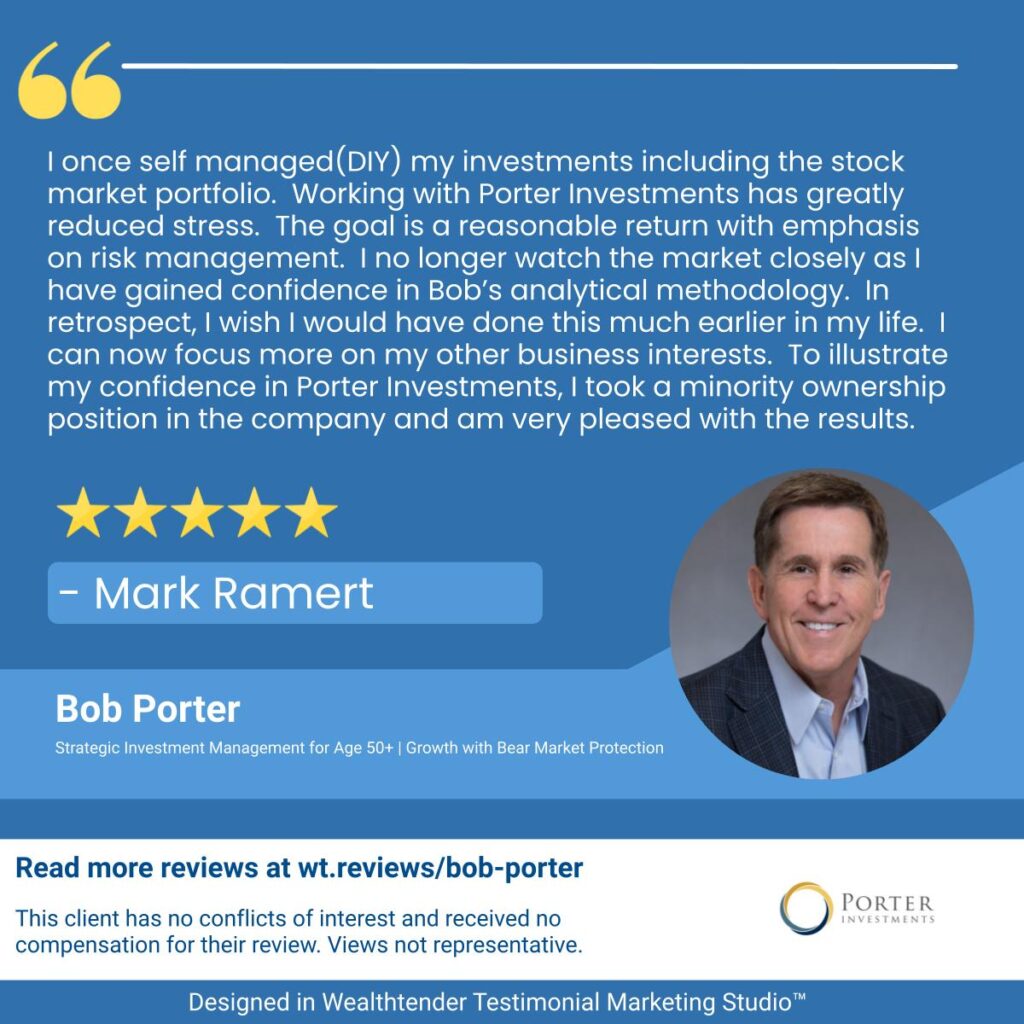

Bob Porter is the President of Porter Investments. Porter Investments is a fiduciary investment management firm based in Houston, Texas, helping self-directed and hybrid investors gain professional guidance and grow their portfolios with tactical strategies. Bob's prior work at Fidelity Investments allowed him the opportunity to advise and study a diverse group of investors.
